
Why I Always Add Value in the First 6 Months of a Commercial Property
TL;DR
The true cost to buy and then sell a $4M commercial property is around 9% once you add stamp duty, due diligence, agency fees and selling costs. If you buy passively and the market does not move, you are underwater from day one. That is why I add value in the first six months of every deal, by compressing the cap rate or lifting the rent, so my capital is protected no matter what the market does.
Watch the video
The short version
This is a cornerstone principle of how I invest. Commercial property is a fairly illiquid market, so you have to buy in a way that is pragmatic and purposeful, not flippant. The safest way to protect an asset against market movements you cannot control is to manipulate an upward shift in value within the first six months of ownership, with your own hands and your own nouse.
Now here is the thing most people miss: the cost of getting in. On a $4M property I walk through the real numbers live, stamp duty around $200,000, valuation, legal and contract reviews, technical due diligence, an air con report, an area survey, a demographics report, and a possible buyer’s agency fee. That comes to about $286,000, roughly 7% on top of the price. Add selling costs of another $92,000 and you are near 9% in and out, before you have earned a dollar of rent or paid a cent of interest. This costed, deliberate approach is the same discipline I teach in commercial property investing in Australia.
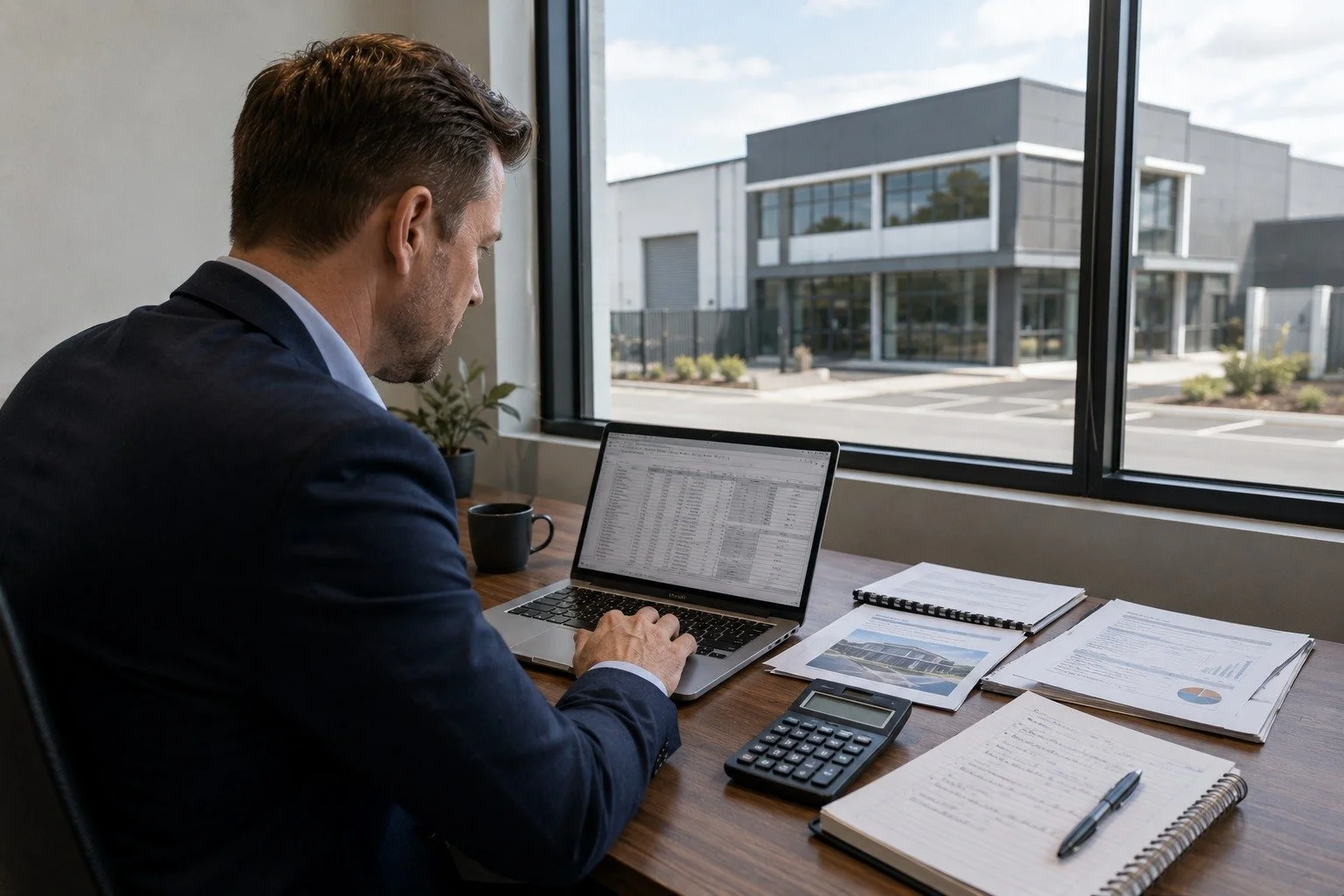
So what do you do about it? You add value early. If you buy at a 7.5% cap rate on $300,000 rent and simply sit there, a 3% annual escalation lifts value by about $120,000 a year, but you are still underwater against your costs. If instead you compress the cap rate by 25 to 50 basis points and lift the rent, you make your transaction costs back in year one and you are in the green. That way, if you ever have to sell into an illiquid market, your capital is safe. This is exactly the discipline that sits inside the six-step framework.
Remember what you are doing when you buy on the open market: out of every buyer in Australia, and maybe worldwide, you are the one person willing to pay the most. So why then sit back and hope the market improves? My mandate is different. I will not even buy an asset unless I can add value in the first six months, because that is how you take ownership on day one instead of betting on interest rates, the GFC, or a bank failure going your way.
Where to go from here
Most people start with the free training. Cal’s Fortify Your Wealth series is a free multi-part video series on the strategies he uses when the market shifts, and there are weekly videos on YouTube.
If you would rather talk it through, book a quick 15-minute intro call with the Investor Code team: book an intro call.

And for the full framework, that is the Commercial Property Mastery online course.
Frequently asked questions
What does it really cost to buy a commercial property?
On a $4M property, acquisition costs run to about $286,000, roughly 7%. That covers stamp duty of around $200,000 plus valuation, legal and contract reviews, technical due diligence, an air con report, an area survey, a demographics report, and any buyer’s agency fee.
Why should you add value in the first six months?
Because the combined cost to buy and sell is close to 9%. If you buy passively and the market stays flat, your capital is underwater. Adding value early, in the first six months, recovers those costs and protects your capital against market movements you cannot control.
How do you add value to a commercial property?
Two main levers: compress the cap rate and increase the rent. Compressing the cap rate by 25 to 50 basis points, or lifting the rent through a re-lease or escalation, can recover your transaction costs in year one and move you into profit.
What is cap rate compression?
Cap rate compression is when the yield used to value a property falls, which raises the capital value for the same rent. If you buy at a 7.5% cap rate and sell at 7% or lower, that shift alone can add significant value to the asset.
Why is commercial property considered illiquid?
Because it can take time and meaningful transaction costs to sell. There is no short selling or automated stop loss like the stock market, so values do not change overnight. That illiquidity is why protecting your capital on the way in matters so much.