
Commercial Property Outgoings in Australia: The Full Guide
General information only, not financial, tax or legal advice. Outgoings rules differ between the states and territories, and between retail and non-retail leases, so the treatment of any single item must be checked against the actual lease and the legislation that applies to it. Speak to a licensed adviser about your own situation.
TL;DR
Commercial property outgoings are the running costs of owning and operating a building: council rates, water rates, building insurance, owners corporation levies, land tax where it is recoverable, management fees, repairs and maintenance, fire and essential safety measures, and common area cleaning. Under a net lease the tenant reimburses most of them. Under a gross lease the owner absorbs them out of the rent. Capital works and structural repairs stay with the owner. Retail leases legislation in each state limits recovery and requires annual estimates and reconciliation statements, and a landlord who misses those deadlines can lose the right to recover. You are buying the net income, not the face rent.

What are outgoings in a commercial lease?
Outgoings are the costs of running the property, as distinct from the rent paid for the right to occupy it. Rates, insurance, levies, maintenance and compliance all have to be paid by someone, and the lease decides who.
In Australian commercial leasing the convention is that the tenant contributes. That is why a commercial yield can look so much higher than a residential one, and why two properties advertised at the same rent can deliver very different income.
The important word is "contributes". A tenant pays outgoings because a clause in the lease says so, within the limits the legislation allows. No clause, no recovery. For the wider picture, see our guide to commercial property investing in Australia.
Commercial property outgoings: the standard categories
Most Australian leases work from a similar list. The wording differs, but the categories are recognisable across office, retail and industrial.
Council rates. Recoverable in full where the tenant occupies the whole building, or by apportionment in a multi-tenanted one.
Water and sewerage rates. Fixed service charges, plus usage where the premises are separately metered.
Land tax. Levied by the state revenue office. The most contested item of all, and recoverability depends on the state and the lease type.
Building insurance. Building, public liability and loss of rent cover taken out by the owner.
Owners corporation or strata levies. The administrative fund portion is generally an operating cost. The sinking or capital works fund portion usually is not.
Management fees. A managing agent collecting rent, administering the lease and reporting. Recoverable in many non-retail leases, restricted in several retail jurisdictions.
Repairs and maintenance. Routine upkeep: air conditioning servicing, patching, pest control, minor plumbing.
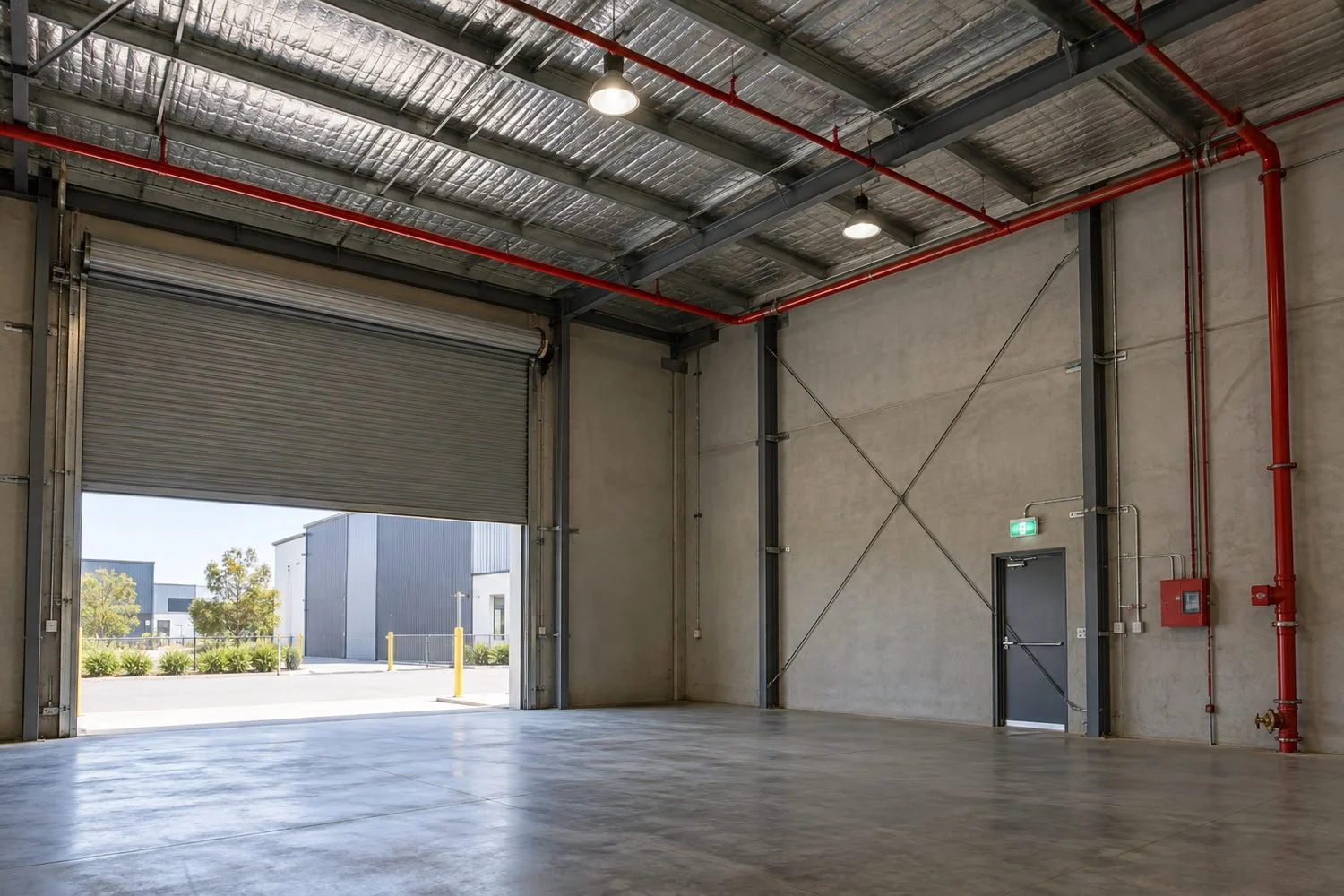
Fire services and essential safety measures. Annual testing and certification of fire systems, exit lighting and extinguishers, plus inspections such as backflow prevention and electrical testing. A compliance obligation in every state.
Cleaning and common areas. Lighting, cleaning, landscaping, security, waste removal, lift servicing.
The list reads as administrative detail until you add it up. On a small suburban building the total is commonly 15% to 30% of gross rent, and strata or multi-tenanted assets run higher.
Recoverable and non-recoverable outgoings
A recoverable outgoing is one the tenant can be required to reimburse. A non-recoverable outgoing is one the owner wears regardless of what the lease says. The dividing line is roughly this: operating the building is a tenant cost, improving or replacing it is an owner cost.
What owners normally cannot pass on
Capital works and capital improvements. A new roof, a new lift, new air conditioning plant, a facade upgrade. The tenant may pay to service the plant, not to replace it.
Structural repairs. Footings, slab, structural walls, roof structure.
Sinking fund or capital works fund levies, which are saving for future capital expenditure and so follow the capital treatment.
The owner's own costs of holding the asset. Interest, income tax, depreciation, accounting.
Leasing costs. Letting fees, agents' commissions and the legal costs of preparing a new lease.
Rectifying defects or non-compliance that existed before the tenant arrived.
Land tax, in the jurisdictions and lease types where it is prohibited.
For a buyer, non-recoverable costs reduce the income you actually receive, so they belong in your yield calculation. Capital expenditure is recurring over a holding period too, so it is worth knowing how commercial property depreciation treats it.
How recovery differs by lease type
Lease type decides who carries outgoings. The labels are used loosely in marketing material, so read the clauses rather than the heading.
Gross lease: Who pays outgoings: Owner pays, out of the rent received; What the rent figure means: Well above the net income
Semi-gross or modified gross: Who pays outgoings: Owner pays a base amount, tenant pays increases above it; What the rent figure means: Net income erodes if outgoings outgrow the base
Net lease: Who pays outgoings: Tenant reimburses recoverable outgoings; What the rent figure means: Close to the net income
Triple net: Who pays outgoings: Tenant carries outgoings plus most maintenance and often structural items; What the rent figure means: Close to net, but the term is used inconsistently here
Comparing two listings without knowing which row they sit in is the most common error we see. Our explainer on net lease versus gross lease sets out the differences, and how to read a commercial lease covers the clauses that control recovery.
The outgoings estimate and reconciliation cycle
Recovery is not a single payment. It runs on an annual cycle, and the cycle has deadlines.
The estimate. Before each accounting period the owner gives the tenant a written estimate of outgoings for the coming year, itemised by category.
Monthly contributions. The tenant pays one twelfth of the estimate with the rent, or whatever instalment the lease specifies.
The reconciliation statement. After the period ends the owner provides a statement of actual outgoings, usually within three months, and in several jurisdictions audited.
The adjustment. The tenant pays any shortfall or receives a credit for any excess.
Why a late estimate can cost the owner the recovery
Retail leases legislation in most states ties the right to recover to compliance with that cycle. If the estimate is not given, or the reconciliation statement is not provided in time, the tenant can generally withhold outgoings contributions until it is, and in some cases the liability for that period falls away.
This is one of the most common ways an owner quietly loses income, usually because a self-managing landlord did not know the deadline existed. For a buyer it creates a specific question: has the vendor issued estimates and reconciliations for every year of the lease, and can they produce them?
Retail leases legislation and the state by state restrictions
Every state and territory has retail tenancy legislation that overrides the lease where the two conflict.
NSW: Retail Leases Act 1994
Vic: Retail Leases Act 2003
Qld: Retail Shop Leases Act 1994
SA: Retail and Commercial Leases Act 1995
WA: Commercial Tenancy (Retail Shops) Agreements Act 1985
Tas: Fair Trading (Code of Practice for Retail Tenancies) Act 1998
ACT: Leases (Commercial and Retail) Act 2001
NT: Business Tenancies (Fair Dealings) Act 2003
The common themes are consistent enough to plan around:
Disclosure before the lease. A statement of estimated outgoings must be given to the tenant before the lease is entered into. An inadequate one can affect what is recoverable.
Only itemised outgoings are recoverable. A category that was not disclosed and specified generally cannot be charged.
Estimates and annual statements are mandatory, with withholding rights if they are not provided.
Apportionment must be reasonable, normally by lettable area, and a tenant cannot be charged for areas or services it has no access to.
Land tax is restricted. In some jurisdictions, including New South Wales and Victoria, it cannot be recovered from a retail tenant at all. Queensland also restricts it, depending on when the lease was entered into. Others allow it subject to disclosure and sometimes a single holding assessment.
Management and administration fees are limited in several states.
Because the land tax position shifts with reform and differs by jurisdiction, treat any statement about it, including this one, as a prompt to check rather than an answer. Confirm the current rule with the state revenue office, and have a property lawyer confirm whether the premises are caught by the retail Act at all. Floor area, use, tenant type and position within a centre can all affect that.
A worked example: gross rent, outgoings and net rent
The numbers below are a generic illustration, not a real transaction.
Say a suburban commercial building is offered at $1.5 million on a face rent of $120,000 a year, with total outgoings of $33,000.
Council rates: $6,500
Water and sewerage: $1,800
Owners corporation levies (admin): $9,000
Building insurance: $2,400
Land tax (single holding): $3,500
Management fees: $3,600
Repairs and maintenance: $2,500
Fire and essential safety measures: $1,200
Cleaning and common areas: $2,500
Total: $33,000
Now run it under three lease structures.
Gross lease: Outgoings carried by owner: $33,000; Net income: $87,000; Net yield on $1.5m: 5.8%
Net lease, land tax and management fees not recoverable: Outgoings carried by owner: $7,100; Net income: $112,900; Net yield on $1.5m: 7.5%
Net lease, all items recoverable: Outgoings carried by owner: $0; Net income: $120,000; Net yield on $1.5m: 8.0%
Same building, same $120,000 face rent, a spread of more than two percentage points in the yield you actually earn and $33,000 a year in cash at the extremes.
That is the central point about commercial property outgoings. The face rent is a negotiating position. The net income is the asset. For the arithmetic, see how to value commercial property and commercial property yields in Australia.
Who pays outgoings in commercial property?
Who pays is answered by the lease, constrained by the legislation, and verified by the records. Check all three, in that order.
Due diligence questions on outgoings
Which outgoings does the lease list as recoverable, item by item, and is the list exhaustive or open ended?
Is this a retail lease under the relevant state Act, and if so which recoveries does that Act cut out?
Is land tax recoverable here, on what basis of assessment, and has the vendor been charging it?
What were the actual outgoings for the last three financial years, not the estimate?
Can the vendor produce the disclosure statement, every annual estimate and every reconciliation statement issued to the tenant?
Are there unresolved disputes, withheld contributions or credits owing?
How are outgoings apportioned in a multi-tenanted building, and does the method match lettable areas?
Is there vacancy, so the owner carries the unlet share?
What capital expenditure is coming: roof, air conditioning plant, car park, essential safety upgrades, outstanding compliance notices?
Does the strata scheme have a current capital works plan, and what do levies look like over the next three years?
Build these into the process in our commercial property due diligence guide. The cheapest discovery is the one you make before exchange.
Where to go from here
Outgoings are the difference between the income a listing implies and the income that reaches your account. They are also one of the few variables in a commercial purchase you can verify precisely before you commit.
If you want to see how this sits inside a complete approach to buying commercial property, Cal Doggett's Fortify Your Wealth video series covers the fundamentals, and the Commercial Property Mastery course works through lease analysis and due diligence in detail. Cal has more than 20 years in Australian commercial property and has transacted over $550 million.
Frequently asked questions
What are outgoings in a commercial lease?
Outgoings are the running costs of owning and operating the premises, separate from rent. They typically include council rates, water rates, building insurance, owners corporation levies, land tax where recoverable, management fees, repairs and maintenance, fire and essential safety compliance, and cleaning of common areas. A tenant pays them only where the lease says so, within the limits of the relevant legislation.
Who pays outgoings in commercial property?
It depends on the lease. Under a net lease the tenant reimburses the recoverable outgoings. Under a gross lease the owner pays them out of the rent received. Under a semi-gross lease the owner covers a base amount and the tenant pays increases above it. Capital works and structural repairs normally remain the owner's responsibility in every structure.
Are outgoings recoverable from a retail tenant in Australia?
Partly. Retail leases legislation in each state and territory limits recovery. Items generally must be disclosed and itemised before the lease is entered into, apportionment must be reasonable, and annual estimates and reconciliation statements are mandatory. Land tax cannot be recovered from retail tenants in some jurisdictions, including New South Wales and Victoria, so the current position needs checking.
What happens if a landlord does not issue an outgoings estimate?
Under most retail leases legislation, the right to recover is conditional on giving the tenant a written estimate before each accounting period and a reconciliation statement afterwards. If the owner misses those deadlines, the tenant can usually withhold outgoings contributions until the documents are provided, and in some cases the recovery for that period is lost entirely.
How much are outgoings on a commercial property?
It varies with building type, age and structure. As a broad guide, outgoings commonly run around 15% to 30% of gross rent on smaller Australian commercial buildings, and strata or multi-tenanted assets sit at the higher end because of levies and common area costs. Always work from the last three years of actual figures rather than an estimate.
Do outgoings affect the yield I should accept?
Yes, directly. A yield quoted on face rent ignores every cost the owner cannot pass on. Recalculate on net income after non-recoverable outgoings, vacancy allowance and expected capital expenditure, then compare properties on that basis. Two assets with identical advertised rents can produce materially different net yields.