
Industrial Property Investment in Australia: A First Buyer’s Guide
General information only, not financial, tax or legal advice. Zoning, contamination liability and essential safety measure obligations differ by state and by council, so verify the rules that apply to any specific property before you commit. Speak to a licensed adviser about your own situation.
TL;DR
Industrial property investment in Australia usually means buying a warehouse, workshop or small industrial unit and leasing it to a business. It is the most common sensible entry point into commercial property for a first-time buyer, because small strata units sit at accessible price points, leases are typically net leases where the tenant pays outgoings, and tenants generally fit out and maintain their own premises. The trade-off is concentration risk. One tenant, one lease, and a building whose re-leasability depends on practical things most residential investors never think about: clearance height, floor loading, three phase power, truck access and zoning. Due diligence is where industrial deals are won or lost.
Why invest in industrial property as a first commercial purchase
Industrial is where most first-time commercial buyers start, and the reasons are structural rather than fashionable. The buildings are simple, leases are usually net, and the tenant's business depends on the premises in a way that encourages them to stay.
Compare it with the alternatives. Office requires you to compete on fit-out quality and amenity. Retail makes you a partner in someone else's trading performance. Industrial asks a narrower question: does this building do the practical job a business needs, at a rent that business can afford?
That is a question a careful buyer can actually answer. You can measure a clearance height, test whether a semi-trailer can turn, and read a zoning certificate. For a view of how the sectors compare, start with our guide to commercial property investing in Australia.
What counts as industrial property
"Industrial" covers a wide range of buildings, and the differences matter more than the label.
Small strata warehouse units and workshops
Individual units inside a larger estate, each separately titled, sharing a driveway, car park and common services through an owners corporation. Typical occupiers are trades, mechanics, small distributors, equipment hire businesses, light manufacturers and online sellers needing storage.
Standalone freestanding facilities
A single building on its own title with its own yard and access. You control the whole site, so there is no owners corporation and no shared decision making, but you carry the full cost of the roof, the hardstand and the fencing.
Distribution and logistics assets
Larger buildings designed around truck movements and racking, often with high clearance, multiple roller doors or recessed docks and substantial hardstand. These usually sit above a first-time buyer's budget and trade between institutions and syndicates.
Specialised industrial
Cold stores, food production facilities and purpose-built manufacturing plants. The income can look attractive, but the pool of businesses able to use the building is narrow, which is a risk you should price deliberately.
The demand drivers behind industrial property
Three broad forces have underpinned demand for Australian industrial space. Treat them as general context, not as a forecast.
E-commerce. Goods ordered online have to be stored, picked and dispatched somewhere, and that somewhere is industrial space near customers.
Logistics and supply chain resilience. Businesses caught short by supply disruption have generally become more willing to hold inventory, and inventory needs floor area.
Scarcity of well-located serviced land. Land that is zoned for industry, serviced with power and water, and close to population centres is finite. Residential rezoning has absorbed a lot of older industrial land in middle-ring suburbs across the capital cities.
None of this guarantees a particular outcome for a particular building. A well-located unit in a tight industrial pocket and a poorly configured unit on a fringe estate can sit in the same market and perform differently.
Entry prices and why small units suit a first-time buyer
Small industrial units investment is often the most accessible commercial entry point simply because the lot sizes are small. A unit of 100 to 300 square metres in a suburban estate is a far smaller cheque than a freestanding office building or a prime strip retail tenancy.
Typical lease structure: Small industrial unit: Net lease, tenant pays most outgoings; Suburban retail shop: Often net, with contribution caps; Small office suite: Frequently gross or semi-gross
Fit-out responsibility: Small industrial unit: Usually tenant, often minimal; Suburban retail shop: Tenant, can be significant; Small office suite: Often landlord expectation
Landlord capital calls: Small industrial unit: Structure, roof, common property; Suburban retail shop: Structure, shopfront, services; Small office suite: Lifts, air conditioning, lobby, refurbishment
Tenant pool breadth: Small industrial unit: Broad if the building is generic; Suburban retail shop: Depends on trade and foot traffic; Small office suite: Depends on amenity and parking
Main sensitivity: Small industrial unit: Access, height, power, zoning; Suburban retail shop: Retail trading conditions; Small office suite: Amenity, competing stock
Commercial lending still works differently from residential. Expect lower loan to value ratios, shorter terms and more scrutiny of the lease. Our guide to commercial property finance covers the mechanics, and how to buy commercial property walks through the purchase process.
The typical industrial lease profile
Most Australian industrial leases are net leases. The tenant pays rent plus outgoings attributable to the premises, commonly council and water rates, land tax where applicable, insurance, owners corporation levies and the cost of maintaining their own services. The specifics come down to what the lease document actually says, so read it rather than assuming.
The practical effect is that your net income is less exposed to rising outgoings than under a gross lease. Our comparison of net lease versus gross lease sets out how the two behave when costs move.
Industrial tenants also tend to fit out and maintain their own premises. A mechanic installs the hoist, a distributor installs the racking. That capital commitment is one reason industrial tenants often renew, and the WALE across your holdings measures how much income certainty you actually have.
Industrial property yields and what drives them
Industrial property yields vary by location, building quality, lease strength and when you are looking. We do not publish current market figures here, because they move and a number quoted out of date is worse than no number. Ask your agent or valuer for recent comparable sales evidence in the specific precinct.
What is stable is the mechanism. Yield is net income divided by price, so it falls as buyers pay more for the same income and rises as they pay less. Say a unit at $1.2 million on a 7% net yield, as an example only. That returns $84,000 net. If the tenant vacates and the unit sits empty six months, you lose roughly $42,000 of income plus holding costs and the leasing fee.
Two yield questions are worth separating: what yield the market is paying, and whether the passing rent is sustainable. A yield calculated on an above-market rent is flattering you. Our guide to commercial property yields in Australia explains how to read the difference.
The due diligence industrial demands
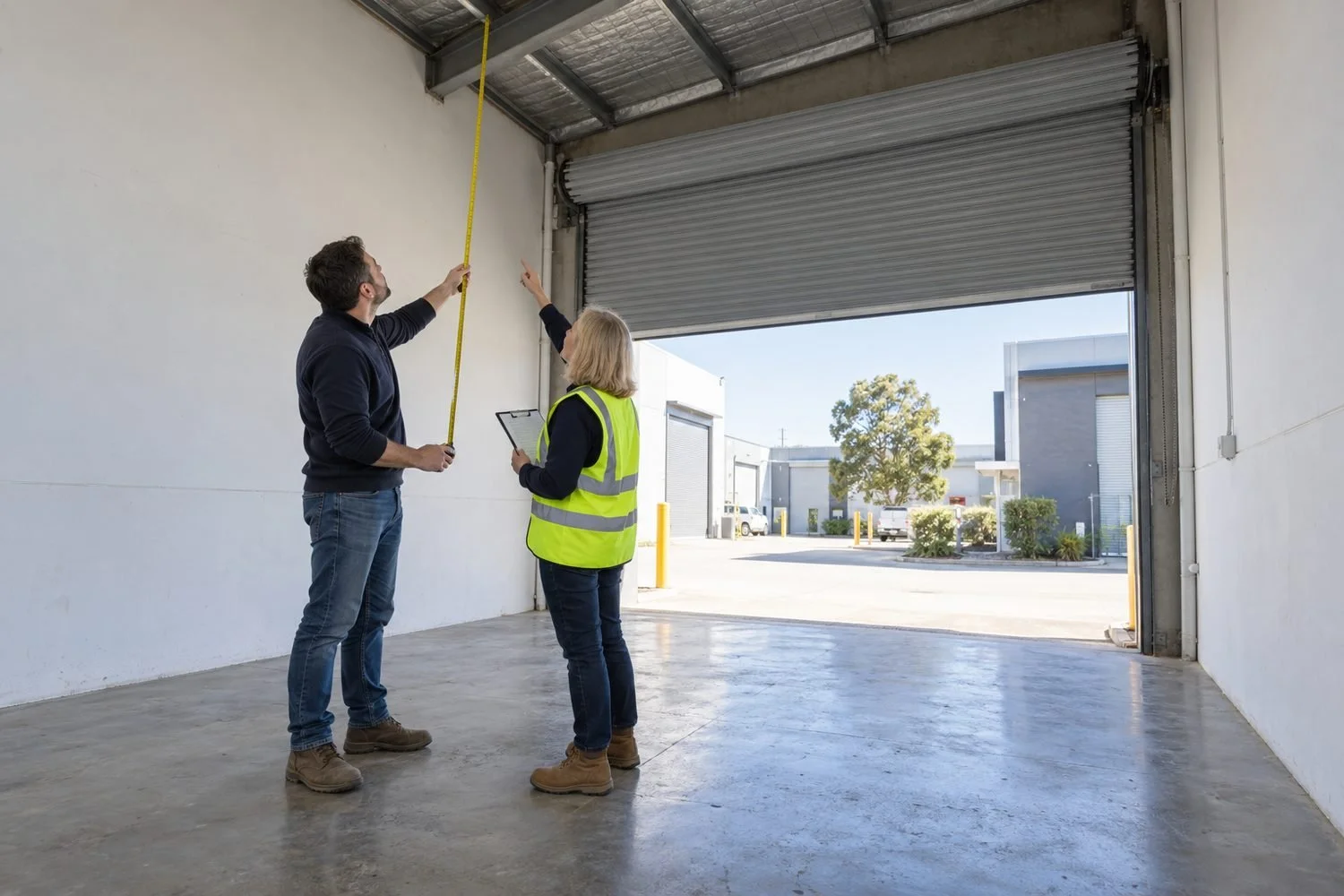
This is where industrial differs most from residential, and where first-time buyers get caught. Work through it with your solicitor and a qualified building consultant.
Zoning and permitted use
Confirm the zone and, more importantly, that the tenant's actual use is permitted in it. A business operating without the right approval is a problem you inherit. Check whether existing use rights are being relied upon and whether they survive a change of occupier. See commercial property zoning in Australia for how the planning layers fit together.
Contamination and environmental history
Industrial land has an industrial past. Ask what was done on the site previously, search the state environmental authority's contaminated land records, and consider a preliminary site investigation where the history warrants it. Former service stations, panel shops and chemical storage sites deserve particular care, because remediation liability is expensive and can attach to the owner.
The physical specification
These are the numbers that decide whether a business can use the building at all.
Clearance height. Internal clear height under the lowest obstruction, not the apex. Racking and forklift reach depend on it.
Floor loading. The slab's rated capacity in tonnes per square metre, governing racking, machinery and pallet stacking.
Power supply. Available amperage, and whether three phase is connected or only available to the street. Upgrades can be slow and costly.
Truck access and turning circles. Can the vehicles the tenant uses enter, manoeuvre and leave without blocking the estate?
Roller door dimensions. Height and width decide what can physically be loaded in.
Hardstand and yard. Sealed, drained external area for parking, loading and storage.
Office to warehouse ratio. Too little office limits some tenants, too much wastes lettable area.
Essential safety measures
Fire systems, exit lighting, sprinklers, alarms, smoke detection and fire doors carry ongoing inspection and certification obligations, with names and processes that vary between states. Ask for current certification and maintenance records, and establish who is responsible for any rectification. Non-compliance found after settlement becomes your cost. Our commercial property due diligence checklist covers the wider document review.
Strata industrial estates and the owners corporation
In a strata estate, the owners corporation generally maintains common property: driveways, visitor parking, shared fire services, fencing, lighting and often the roof and external structure. It levies owners for that work and for the sinking fund.
What it does not usually cover is anything inside your unit. The roller door motor, internal lighting, office air conditioning and the tenant's fit-out sit with you or the tenant, depending on the lease. Read the owners corporation records before you buy: financial statements, sinking fund balance, minutes, insurance, and any proposed special levies or disputes on foot. An estate facing a roof replacement with no sinking fund is a cost heading your way.
The risks you take on
Industrial is not a low risk asset, it is a different risk profile.
Single-tenant exposure. One tenancy means income is binary, either fully let or fully vacant, and commercial vacancy is usually measured in months rather than weeks.
Specialised fit-outs. A building adapted tightly to one tenant's process narrows the pool of businesses that can use it next.
Make good. Leases typically require the tenant to return the premises to an agreed condition. Enforcing make good is a real cost and a real dispute risk, and a tenant who leaves owing it may not be able to pay.
Capital expenditure timing. Roofs, slabs and hardstand do not fail gradually in a convenient year.
Market and credit conditions. Values respond to interest rates and lending appetite, and tenants respond to their own trading conditions.

What makes one unit re-leasable and the one next door vacant
Two units in the same estate can have very different outcomes, and the reasons are usually mundane.
The re-leasable unit tends to be generic enough to suit many businesses and practical enough to suit them well. Good access with room to manoeuvre a truck. Enough clear height. Adequate power. A sensible office ratio. Nothing structural that only one type of operator would want.
The unit that sits vacant often has a specific defect. A tight approach a rigid truck cannot negotiate. A column in the middle of the floor. Low clearance that rules out racking. Single phase power where tenants need three phase. Those defects do not stop a sale, they quietly reduce the pool of future tenants and the rent they will pay.
Buy for the next tenant, not just the current one. The current lease is the income you are buying. The building's practical flexibility is the income you are keeping.
Where to go from here
If industrial is where you are considering starting, the useful next step is learning how to assess a specific building and a specific lease rather than the sector in general. Cal Doggett's free Fortify Your Wealth video series walks through how he approaches commercial property acquisition and risk: https://investorcode.com.au/fortify-your-wealth-series.
For buyers who want the full framework, covering due diligence, lease analysis, finance and structuring, the Commercial Property Mastery course runs through the process end to end: https://investorcode.com.au/online-course. Cal has spent more than 20 years in Australian commercial property and has transacted over $550M, and the material reflects how those deals were assessed rather than theory.
Frequently asked questions
Is industrial property a good first commercial investment in Australia?
It is the most common entry point, largely because small units are affordable, leases are usually net, and buildings are simple to assess. It still carries single-tenant risk and vacancy risk. Suitability depends on your equity, borrowing capacity, holding ability and whether you can complete proper due diligence on the specific building.
How much do you need to buy a small industrial unit?
It depends entirely on location and size, so get current comparable evidence for the precinct you are looking at. Plan for the deposit plus stamp duty, legal fees, building and environmental reports, loan costs and GST treatment, and hold a buffer for vacancy and capital works. Commercial lending generally requires more equity than residential.
What are the main things to check when buying a warehouse investment?
Zoning and permitted use, contamination history, clearance height, floor loading, power supply including three phase, truck access and turning circles, roller door dimensions, hardstand, and essential safety measure compliance. Then the lease itself: term, options, rent review mechanism, outgoings recovery, bank guarantee and make good obligations.
Who pays outgoings on an industrial lease?
Most Australian industrial leases are net leases, where the tenant pays rent plus outgoings such as council and water rates, insurance, owners corporation levies and land tax where recoverable. Recovery rules vary by state and by lease, and some costs are not recoverable at all, so have your solicitor confirm what the actual document allows.
What does the owners corporation cover in a strata industrial estate?
Generally common property: driveways, visitor parking, shared fire services, external lighting, fencing, and often the roof and external structure. It does not usually cover anything inside your unit, including the roller door motor, internal lighting and office air conditioning. Review the financial statements, sinking fund, minutes and any proposed special levies before buying.
Why do some industrial units stay vacant longer than others?
Usually because of a practical limitation that narrows the tenant pool. Poor truck access, insufficient clear height, internal columns, inadequate power, an awkward office ratio, or a previous tenant's specialised fit-out the next occupier would have to remove. Generic, well-serviced, easily accessed units tend to re-lease faster across a wider range of businesses.